Antibiotics and infants

Babies’ immune systems are still developing, and sometimes it can seem that they pick up every cough and cold that’s going around, especially if they go to daycare or have older siblings.
While children generally recover well from infections, the best way to keep your child healthy is through prevention. Following good handwashing practices, especially with visitors, prevents the spread of infection. Following BC’s immunization schedule and staying up to date with vaccinations is another important way to prevent infection.
Most of the common illnesses that infants and young children get are colds and flu, which are caused by viruses. Viral infections cannot be treated by antibiotics and are often best managed at home.
When to seek help:
- If a baby under 3 months has a cough or fever
- If your child has trouble breathing
Some other illnesses are caused by bacteria, and many of these can also be managed at home but may require antibiotics. It’s important to remember that some conditions do need antibiotics to resolve safely, and that your healthcare provider has been trained to determine when antibiotics are the right choice. Having a conversation with your healthcare provider about when antibiotics are needed can help you feel confident in the decisions you are making together.
Antibiotic side effects and the microbiome
If your baby’s care healthcare provider prescribes antibiotics, it’s important to follow the directions on the bottle. Oral antibiotics often have side effects like upset tummy and diarrhea that can be uncomfortable for a baby and their parents. These side effects are not an allergic reaction, and it is safe to continue the treatment.
These tummy side effects happen because antibiotics don’t only kill the bad bacteria; they also kill a lot of the good bacteria we all have in our gut, the gut microbiome. The microbiome is a community of hundreds of types of good bacteria that help us digest food. The microbiome also supports the development of a healthy immune system in babies and young children. Learn more about the bacteria that make up our gut microbiome.
Antibiotics and Asthma

New research in BC and Manitoba has found a strong link between antibiotic use in babies and asthma and other allergic conditions later in childhood.
The researchers looked at the health records of over 475,000 children and could see an increased chance of asthma diagnosis in children who had been given antibiotics as babies.
This increased chance occurred even after accounting for other factors that influence asthma, including parents’ history of asthma, air quality, and type of infection the baby had.
This is due to antibiotics killing good bacteria in the gut microbiome at a time when gut bacteria are needed to help the immune system develop properly.
Breastmilk and antibiotics
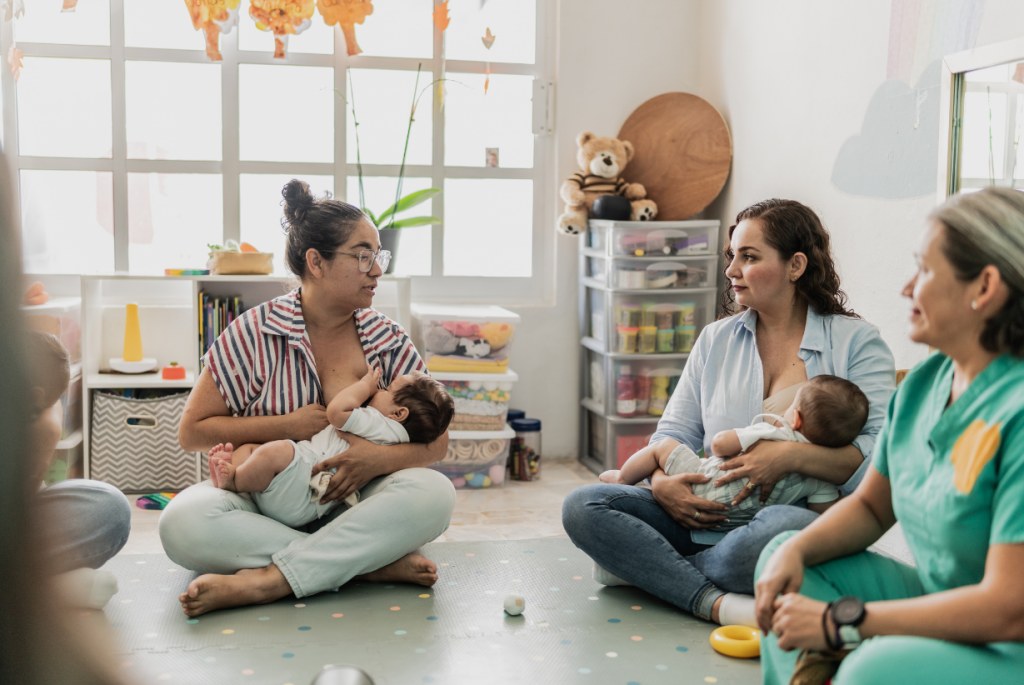
Other research has shown that if a baby does need antibiotics, breastmilk can help replenish the good bacteria of the gut more quickly. This is because breastmilk is a natural “microbiome starter kit” containing good bacteria (probiotics) to help seed the gut microbiome, along with special sugars (prebiotics) that feed good bacteria in the gut. Breastfeeding can help reduce the possibility of asthma diagnosis later in life. This benefit is stronger with longer and more exclusive breastfeeding, directly at the breast – but any amount of breastmilk is helpful, whether it’s pumped or supplemented with formula.
If you are planning to breastfeed, check out local support options early in case they are needed:
- Your local public health unit’s lactation services
- Your midwife or primary care provider
- 811 to request free lactation consultations
- BC Lactation Consultant Association to find support near you
FAQs
The study looks at patterns across groups of children, so it cannot predict what will happen to any individual child. Breastmilk for any amount of time provides many benefits. Longer duration is linked to greater benefit, but there is no single cutoff point where these benefits end. The strongest effects are seen early in infancy – so your milk made a difference!
Our study clearly found a risk associated with antibiotic use regardless of the type of infection. This allows us to conclude that antibiotics directly affect the risk. It remains possible that some respiratory infections also contribute to risk.
The largest effect is in infants under one year. The link is less strong for older babies and toddlers. It’s always important to only use antibiotics when they are really needed.
Antibiotics can pass from the mother into her milk, and this can have an impact on baby’s gut microbiome. However, the benefits of breastfeeding strongly outweigh that risk for most antibiotics. When it comes to longer term health effects, it seems that antibiotics given directly to the baby confer the greatest risk.
Any amount of breast milk provides benefits for your baby, including supporting immune development and the gut microbiome.
Research shows that feeding directly at the breast is associated with the lowest risk of conditions like asthma. Mixed feeding (breast milk and formula) is associated with higher risk than exclusive breastfeeding, but lower risk than exclusive formula feeding.
Many families use a combination of feeding methods. When formula is used, continuing to provide breast milk still offers important benefits.
Calling 8-1-1 is the best resource for determining when your baby needs to see a healthcare provider if you are unsure. If it is an emergency, call 9-1-1.
References
- Thomas SP, Denizer E, Zuffa S, Best BM, Bode L, Chambers CD, Dorrestein PC, Liu GY, Momper JD, Nizet V, Tsunoda SM, Tremoulet AH. Transfer of antibiotics and their metabolites in human milk: Implications for infant health and microbiota. Pharmacotherapy. 2023 May;43(5):442-451. doi: 10.1002/phar.2732. Epub 2022 Oct 18. PMID: 36181712; PMCID: PMC10763576.
- Hoskinson C, Medeleanu MV, Reyna ME, Dai DLY, Chowdhury B, Moraes TJ, et al. Antibiotics taken within the first year of life are linked to infant gut microbiome disruption and elevated atopic dermatitis risk. J Allergy Clin Immunol. 2024 Jul;154(1):131–42.
- Arrieta MC, Stiemsma LT, Dimitriu PA, Thorson L, Russell S, Yurist-Doutsch S, et al. Early infancy microbial and metabolic alterations affect risk of childhood asthma. Sci Transl Med. 2015 Sep 30;7(307):307ra152.
- Hoskinson C, Dai DLY, Del Bel KL, Becker AB, Moraes TJ, Mandhane PJ, et al. Delayed gut microbiota maturation in the first year of life is a hallmark of pediatric allergic disease. Nat Commun. 2023 Aug 29;14(1):4785.
- Laforest-Lapointe I, Arrieta MC. Patterns of Early-Life Gut Microbial Colonization during Human Immune Development: An Ecological Perspective. Front Immunol [Internet]. 2017 Jul 10 [cited 2024 Nov 11];8. Available from: https://www.frontiersin.org/journals/immunology/articles/10.3389/fimmu.2017.00788/full
- Donald K, Finlay BB. Early-life interactions between the microbiota and immune system: impact on immune system development and atopic disease. Nat Rev Immunol. 2023 Nov;23(11):735–48.
- Duong QA, Pittet LF, Curtis N, Zimmermann P. Antibiotic exposure and adverse long-term health outcomes in children: A systematic review and meta-analysis. J Infect. 2022 Sep 1;85(3):213–300.
- Dai DLY, Petersen C, Hoskinson C, Del Bel KL, Becker AB, Moraes TJ, et al. Breastfeeding enrichment of B. longum subsp. infantis mitigates the effect of antibiotics on the microbiota and childhood asthma risk. Med N Y N. 2023 Feb 10;4(2):92-112.e5.
- Dai D, Manus M, Hoskinson C et al. Breastfeeding may lessen socioeconomic disparities in child health through differences in the infant gut microbiome. Cell Reports Medicine, 2026; 7
- Azad MB, Vehling L, Lu Z, Dai D, Subbarao P, Becker AB, et al. Breastfeeding, maternal asthma and wheezing in the first year of life: a longitudinal birth cohort study. Eur Respir J. 2017 May;49(5):1602019.
- Shenhav L, Fehr K, Reyna ME, Petersen C, Dai DLY, Dai R, et al. Microbial colonization programs are structured by breastfeeding and guide healthy respiratory development. Cell. 2024 Sep 19;187(19):5431-5452.e20.
- Patrick DM, Sbihi H, Dai DLY, Al Mamun A, Rasali D, Rose C, et al. Decreasing antibiotic use, the gut microbiota, and asthma incidence in children: evidence from population-based and prospective cohort studies. Lancet Respir Med [Internet]. [cited 2020 Jul 13]; Available from: https://doi.org/10.1016/S2213-2600(20)30052-7
- Mamun AA, Zou C, Lishman H, Stenlund S, Xie M, Chuang E, et al. Association between antibiotic usage during infancy and asthma incidence among children: a population-level ecological study in British Columbia, Canada. Front Allergy. 2024;5:1456077.
- Lishman H, Nickel NC, Sbihi H, Xie M, Mamun A, Zhang BY, et al. Investigating the effect of early life antibiotic use on asthma and allergy risk in over 600 000 Canadian children: a protocol for a retrospective cohort study in British Columbia and Manitoba. BMJ Open. 2023 Apr 4;13(4):e067271.
- Lishman H. The impact of antibiotic use in infancy on asthma and allergy incidence in 600,000 Canadian children: retrospective cohort studies in British Columbia and Manitoba. 42nd Annual Meeting of the European Society for Paediatric Infectious Diseases; 2024 May 22.
- Medeleanu MV, Reyna ME, Dai DLY, Winsor GL, Brinkman FSL, Verma R, et al. Exploring the potential mediating role of systemic antibiotics in the association between early-life lower respiratory tract infections and asthma at age 5 in the CHILD study. Front Allergy [Internet]. 2025 Jan 21 [cited 2026 Jan 27];5. Available from: https://www.frontiersin.org/journals/allergy/articles/10.3389/falgy.2024.1463867/full
- Lee TY, Petkau J, Saatchi A, Marra F, Turvey SE, Lishman H, et al. Impact analysis of infant antibiotic exposure on the burden of asthma: a simulation modeling study. Front Allergy [Internet]. 2024 Dec 23 [cited 2026 Jan 27];5. Available from: https://www.frontiersin.org/journals/allergy/articles/10.3389/falgy.2024.1491985/full